College of Information Technology at Amman Arab University (AAU) Organizes a Workshop in Collaboration with the National Center for Security and Crisis Management
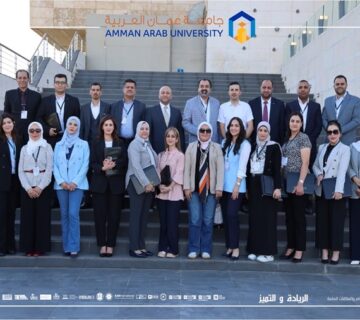
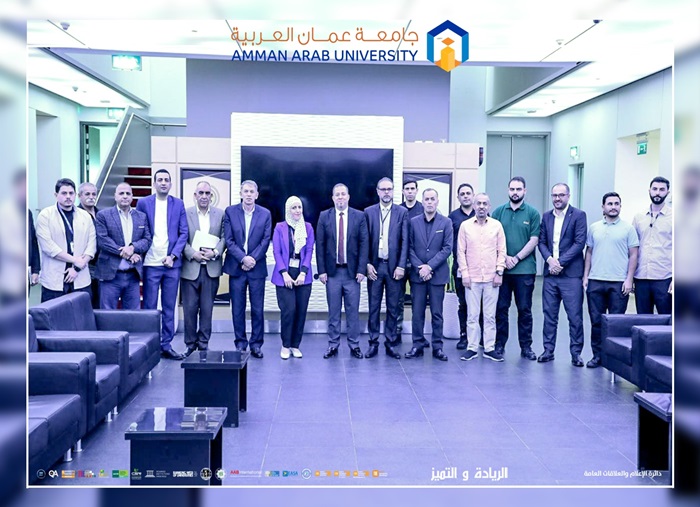
Reflecting Amman Arab University’s commitment to keeping pace with digital transformations and fostering awareness of modern technologies, the University’s College of Information Technology—in collaboration with the National Center for Security and Crisis Management—organized a workshop titled “Towards a Secure Digital Government: Artificial Intelligence, Cyber Awareness, and Crisis Management,” featuring the participation of a distinguished group of faculty members. The workshop featured three specialized academic sessions covering integrated topics in artificial intelligence, cybersecurity, and crisis management, highlighting the importance of leveraging modern technologies to enhance organizational readiness and the capacity to address digital challenges. The sessions opened with a lecture by Dr. Malik Jawarneh, Vice Dean of the College of Information Technology, titled “Artificial Intelligence in Crisis Management”. He discussed the potential of AI technologies to anticipate and predict crises before they occur and to support decision-making through intelligent analysis tools, as well as their role in accelerating crisis response and improving risk management efficiency within organizations.
In the second session, Dr. Omar Al-Mrayat, a faculty member in the Software Engineering Department, presented a lecture titled “Security of Government E-Services”. He outlined key security challenges and risks associated with digital government services, alongside effective practices and measures to protect electronic systems and services, thereby ensuring their reliability and the efficient and secure continuity of service delivery to citizens amid rising cyber threats.
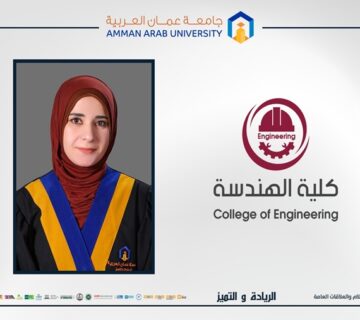
The sessions concluded with a lecture by Engineer We’am Adel Telfah from the Computer Science Department titled “Cybersecurity Awareness and Culture”. She focused on the importance of building security awareness and fostering a cybersecurity culture among individuals and organizations, promoting safe digital practices, and instilling responsible behavior in the use of technology and the digital space, recognizing that awareness and knowledge are fundamental pillars for preventing and mitigating cyber risks.
In this context, Dr. Rami Sihwail, Dean of the College of Information Technology at Amman Arab University, emphasized that organizing this workshop aligns with the College’s vision of strengthening its academic and societal role in keeping pace with digital transformation. He noted the importance of embedding concepts of cybersecurity and artificial intelligence through specialized academic events that combine theoretical knowledge with practical application.
He added that partnerships with national institutions—foremost among them the National Center for Security and Crisis Management—serve as a cornerstone in preparing qualified personnel equipped with the skills to tackle rapidly evolving technical and security challenges, thereby supporting the Kingdom’s efforts to build a secure and sustainable digital government.
The workshop was organized as part of the College of Information Technology’s commitment to advancing knowledge in artificial intelligence and cybersecurity, highlighting their roles in supporting digital transformation and enhancing the capabilities of academic staff to keep pace with the latest technological developments and challenges related to digital security and crisis management.
This initiative also reflects the College’s approach to organizing specialized academic events that foster knowledge enrichment and the exchange of expertise while strengthening cooperation and partnerships with national institutions. These efforts align with the University’s vision of supporting digital transformation, embedding a culture of cybersecurity, and preparing qualified academic and professional personnel equipped with the knowledge and skills necessary to address future challenges.